Showing posts with label cloud. Show all posts
Showing posts with label cloud. Show all posts
Thursday, 28 September 2017
Is there a competition law issue lurking on the horizon of cloud computing
Is there a competition law issue lurking on the horizon of cloud computing
In 2006, Amazon made available a beta version of a service called �Elastic Compute Cloud�, described as

As such, AWS early on enjoyed first mover advantage (being the first cloud computing service �to succeed on a large scale�) and continues to benefit from network effects. As well, the burden of switching costs served to make it more likely that a user will be reluctant to move to another cloud service. Based on these advantages, AWS has raced far ahead of its competition. It is three times larger than its nearest competitor�Microsoft Azure. Other potential competitors are even less visible, including competing offerings from IBM and Google. At least these two hi-tech behemoths are still in the game; Hewlett-Packard has apparently simply withdrawn from the field. Even Salesforce.com, which is a prominent provider of on-line applications, announced that it will begin to make use of AWS services.
What will slow AWS�s continued dominant position in the industry? The article suggests that users are aggressive in trying to avoid being locked-in to AWS as their sole cloud services provider. It further reports that, at least in Europe, two-fifths of the companies in the cloud use more than one cloud service. Also, while the AWS service is highly popular with start-up developers, it has less success in attracting larger, established companies, in part, it would seem, from a hesitation by such companies to be tied up with a potential competitor, given the ever-increasing nature of Amazon�s product and service offerings. These countervailing forces argue that there may be a limit as to how much more AWS can grow.
Still, based on the information in the article, AWS does seem to enjoy a dominant position with smaller developers. If this were to be found to be the relevant population for vetting competition law concerns, then attention to pricing (should prices begin to tick upwards) and the ease or difficulty of switching to another cloud service, bears watch, especially since the computing infrastructure required might serve as a potential barrier to entry for competitors. Or perhaps less conventional metrics will be brought to bear. The article itself does not go into a discussion of how anti-competitive behavior by AWS might look, stating merely that�
�AWS could end up dominating the IT industry just as IBM�s System/360, a family of mainframe computers, did until the 1980s. If that happens, the antitrust authorities may eventually have to step in, as they did with IBM.�
read also: How to Unlock LG Optimus F6 Metro PCS Pattern/Security Code Free
Even more, this Kat remembers the frequently made comment that antitrust suits such as the IBM case, especially in the technology area, are almost always late to the game: either the technology is passing the target industry by, or the law suit is a cue to the target to seek new products and markets. If this be true, then it raises an interesting question: what would the filing of such a law suit say about the cloud-computing industry? Is the pace of innovation so seriously stuck in neutral, and the nature of cloud-computing so very different from the world of IBM�s System/ 360 family of mainframe computers, that there might be greater justification in considering such a law suit, should there be prima facie indicia of anti-competitive behavior? Or will such a suit be a redux of the IBM litigation? Stay tuned (especially if your computing connectivity is from the cloud).
download file now

Tuesday, 26 September 2017
Cloud Root Apk Free Download Latest for Android Phone Tablets
Cloud Root Apk Free Download Latest for Android Phone Tablets

Download Pepsi IPL 7 2014 Patch genuine kits
To download the kits, just click on the download links for the following teams and then to install it, just copy the files of the kit to the root folder of EA Sports Cricket07 (By default C:Program FilesEA SportsEA Sports(TM) Cricket07)A2 Studios Pepsi IPL 7 2014 Patch Teams Kits:
- Chennai Super Kings (CSK) Kit

DOWNLOAD
- Delhi Daredevils (DD) Kit: Download
- Kolkata Knight Riders (KKR) Kit: Download
- Kings XI Punjab (KXIP) Kit: Download
- Mumbai Indians (MI) Kit: Download
- Rajasthan Royals (RR) Kit: Download
- Royal Challengers Bangalore (RCB) Kit: Download
- SunRisers Hyderabad (SRH) Kit: Download
A2 Studios Pepsi IPL 7 2014 Patch Umpire Kits:
- Red Umpire Kit: Download
- Black Umpire Kit: Download
download file now
Saturday, 23 September 2017
SN 1987a in the Large Magellanic Cloud
SN 1987a in the Large Magellanic Cloud

Glittering stars and wisps of gas create a breathtaking backdrop for the self-destruction of a massive star, called supernova 1987A, in the Large Magellanic Cloud, a nearby galaxy. Astronomers in the Southern hemisphere witnessed the brilliant explosion of this star on February 23, 1987.
Shown in this NASA/ESA Hubble Space Telescope image, the supernova remnant, surrounded by inner and outer rings of material, is set in a forest of ethereal, diffuse clouds of gas. This three-color image is composed of several pictures of the supernova and its neighboring region taken with the Wide Field and Planetary Camera 2 in September 1994, Feb. 1996 and July 1997.
Image Credit: Hubble Heritage Team (AURA/STScI/NASA/ESA)
Explanation from: https://www.spacetelescope.org/images/opo9904a/
download file now
Monday, 4 September 2017
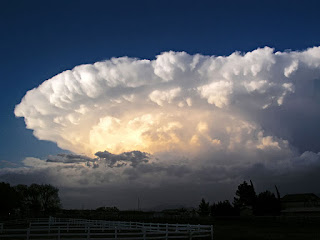
Cumulonimbus Cloud seen from the International Space Station
Cumulonimbus Cloud seen from the International Space Station

The cauliflower-like formations above the flat part of this cumulonimbus cloud represent overshooting cloud tops. Overshooting tops occur when forces push the clouds up through the troposphere, the lowest region of the atmosphere, and into the stratosphere. The warm central Pacific Ocean sea surface during the 2015-2016 El Ni�o lofted abnormal amounts of cloud ice and water vapor into the stratosphere, creating conditions similar to those that could occur on a larger scale in a warming world.
Image Credit: NASA/ESA
Explanation from: https://www.nasa.gov/feature/langley/2015-2016-el-ni-o-provided-natural-experiment-on-the-effects-of-warming-seas
download file now
Thursday, 31 August 2017
Lenticular Cloud over Volcano
Lenticular Cloud over Volcano

Patagonia, Argentina
Image Credit: David H. Collier/Getty Images
download file now
Tuesday, 22 August 2017
Molecular Cloud W51
Molecular Cloud W51

- Giant molecular clouds, containing mostly hydrogen and helium, are where most new stars and planets form.
- W51 is one of the closest such objects to Earth so it is an excellent target for learning more about the star-formation process.
- A new composite image of W51 with X-ray data from Chandra (blue) and Spitzer (orange and yellow-green) is being released.
- The X-ray data show the young stars are often clumped together in clusters, while bathing their surroundings in high-energy light.
In the context of space, the term cloud can mean something rather different from the fluffy white collections of water in the sky or a way to store data or process information. Giant molecular clouds are vast cosmic objects, composed primarily of hydrogen molecules and helium atoms, where new stars and planets are born. These clouds can contain more mass than a million suns, and stretch across hundreds of light years.
The giant molecular cloud known as W51 is one of the closest to Earth at a distance of about 17,000 light years. Because of its relative proximity, W51 provides astronomers with an excellent opportunity to study how stars are forming in our Milky Way galaxy.
A new composite image of W51 shows the high-energy output from this stellar nursery, where X-rays from Chandra are colored blue. In about 20 hours of Chandra exposure time, over 600 young stars were detected as point-like X-ray sources, and diffuse X-ray emission from interstellar gas with a temperature of a million degrees or more was also observed. Infrared light observed with NASAs Spitzer Space Telescope appears orange and yellow-green and shows cool gas and stars surrounded by disks of cool material.
W51 contains multiple clusters of young stars. The Chandra data show that the X-ray sources in the field are found in small clumps, with a clear concentration of more than 100 sources in the central cluster, called G49.5?0.4 (pan over the image to find this source.)
Although the W51 giant molecular cloud fills the entire field-of-view of this image, there are large areas where Chandra does not detect any diffuse, low energy X-rays from hot interstellar gas. Presumably dense regions of cooler material have displaced this hot gas or blocked X-rays from it.
One of the massive stars in W51 is a bright X-ray source that is surrounded by a concentration of much fainter X-ray sources, as shown in a close-up view of the Chandra image. This suggests that massive stars can form nearly in isolation, with just a few lower mass stars rather than the full set of hundreds that are expected in typical star clusters.
Another young, massive cluster located near the center of W51 hosts a star system that produces an extraordinarily large fraction of the highest energy X-rays detected by Chandra from W51. Theories for X-ray emission from massive single stars cant explain this mystery, so it likely requires the close interaction of two very young, massive stars. Such intense, energetic radiation must change the chemistry of the molecules surrounding the star system, presenting a hostile environment for planet formation.
Image Credit: X-ray: NASA/CXC/PSU/L.Townsley et al; Infrared: NASA/JPL-Caltech
Explanation from: http://chandra.harvard.edu/photo/2017/w51/
download file now
Subscribe to:
Posts (Atom)